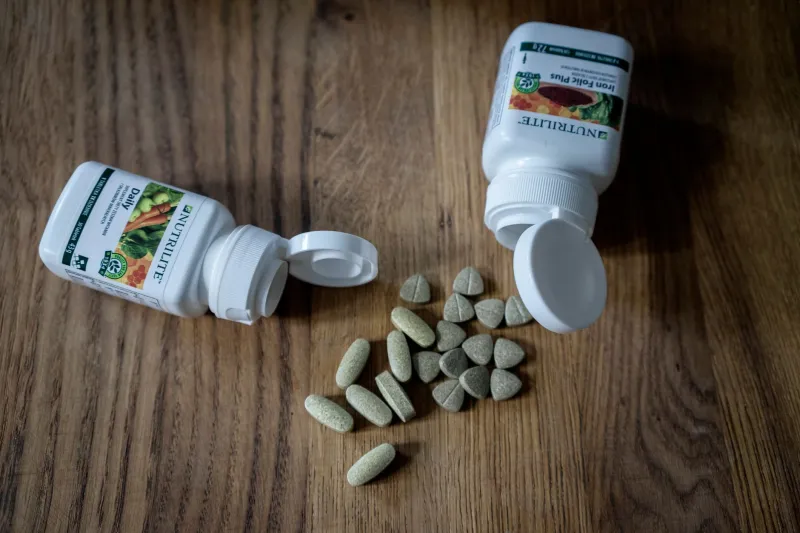
Brand Loyalty in the Supplement Aisle Is a Trap — Here's How to Break Out of It

Let's be honest: there's something comforting about the familiar bottle. You know the label, you trust the brand, and reordering takes about thirty seconds. But here's the uncomfortable question — is that comfort actually serving your health, or is it just serving your habit?
Brand loyalty is a concept the supplement industry has worked very hard to cultivate in you. And in some ways, it makes sense. Consistency matters in any wellness routine. But there's a real difference between being consistent about what you put in your body and being loyal to a particular company's version of it. Those two things are not the same, and conflating them could be quietly capping your results.
Formulas Change More Than You Think
Here's something most supplement companies don't advertise: their formulas get updated. Ingredient ratios shift. Excipients — the fillers and binders that hold capsules together — get swapped out. Sourcing changes when supplier contracts change. Sometimes these updates are improvements. Sometimes they're cost-cutting moves dressed up as reformulations.
Unless you're reading the fine print on every label every time you reorder, you might not even notice. The product looks the same. The branding is identical. But what's inside could be meaningfully different from what you started taking two years ago.
This is especially relevant for products containing botanical extracts, where potency is tied to standardization — meaning the guaranteed concentration of an active compound. A rhodiola supplement standardized to 3% rosavins is a fundamentally different product than one standardized to 1%, even if the bottle size and price are the same. Brand loyalty doesn't protect you from that kind of variation. Paying attention does.
The Research Doesn't Stand Still Either
The supplement space moves fast. What was considered the gold-standard form of a nutrient three years ago may have been lapped by newer research pointing to a more bioavailable version. Magnesium oxide was the default magnesium supplement for decades — cheap, widely available, and pretty much useless for most people due to its low absorption rate. Magnesium glycinate and threonate have largely replaced it in quality formulations, but plenty of brands are still pushing oxide because the margins are better.
The same evolution has happened with vitamin B12 (cyanocobalamin versus methylcobalamin), folate (folic acid versus methylfolate), and omega-3s (the ongoing debate between ethyl ester and triglyceride forms). If you bought into a brand back when they were using the older form and you haven't re-evaluated since, you may be paying current prices for outdated science.
Switching brands strategically — with an eye on what's actually in the product, not just who makes it — keeps you aligned with where the research actually is.
When Brand Rotation Makes Sense
This isn't an argument for impulsive brand-hopping or chasing whatever's trending on Reddit. That's a different kind of trap. What we're talking about is strategic rotation — a deliberate, structured approach to evaluating your supplement lineup on a regular basis.
A reasonable cadence is every six to twelve months. When you're coming up on a reorder, take five minutes to do a quick competitive check:
- Look at the form of the active ingredient. Is there a more bioavailable version available from another brand at a comparable or better price?
- Check the third-party testing status. NSF Certified for Sport, USP Verified, and Informed Sport are the credibility markers worth looking for. Not every brand you've been loyal to has kept up with certification standards.
- Compare the inactive ingredients. If you've developed any sensitivities or you're simply trying to reduce your overall chemical load, scanning the excipient list matters.
- Look for recent formula updates. A quick search of the product name plus "formula change" or "new formula" can surface consumer discussions worth reading.
This doesn't have to be a massive research project. It's more of a periodic gut-check to make sure your money is still going to the best available option, not just the most familiar one.
The Membership Advantage
One of the real benefits of shopping through a platform like HealthKart Club is that you're not locked into a single brand ecosystem the way you might be with a direct-to-consumer supplement company. When you're buying from a curated marketplace that carries multiple brands, strategic switching is actually easy — you're comparing options in one place rather than hunting across a dozen different websites.
Use that to your advantage. If a newer brand comes in offering a superior form of a nutrient you're already taking — say, a CoQ10 in ubiquinol form versus ubiquinone — you're in a position to make that switch without disrupting your whole routine. Same product category, better version, comparable or lower cost because of member pricing. That's the system working for you.
Consistency in Outcome, Not in Brand
Here's the reframe that might help this click: the goal of your supplement routine is consistent results, not consistent brand loyalty. If switching from Brand A to Brand B gets you a more bioavailable form of vitamin D3 paired with K2 at a better price point, that switch is an act of discipline, not inconsistency.
The brands that deserve your long-term loyalty are the ones that keep earning it — through transparent labeling, third-party verification, up-to-date formulations, and honest communication about what's in their products. If a brand is doing all of that, great. Stay with them. But if you haven't checked recently, it might be worth finding out if they still deserve the benefit of the doubt.
Your health goals are the constant. Everything else — including the brand on the label — should be in service of those goals, not the other way around.